
Air conditioning in a flat: what leaseholders need to know
Flats overheat worse than houses and carry the tightest rules on fitting cooling. Here is what your lease says, where the condenser can go, what freeholder consent costs, and the options when there is no outdoor space at all.
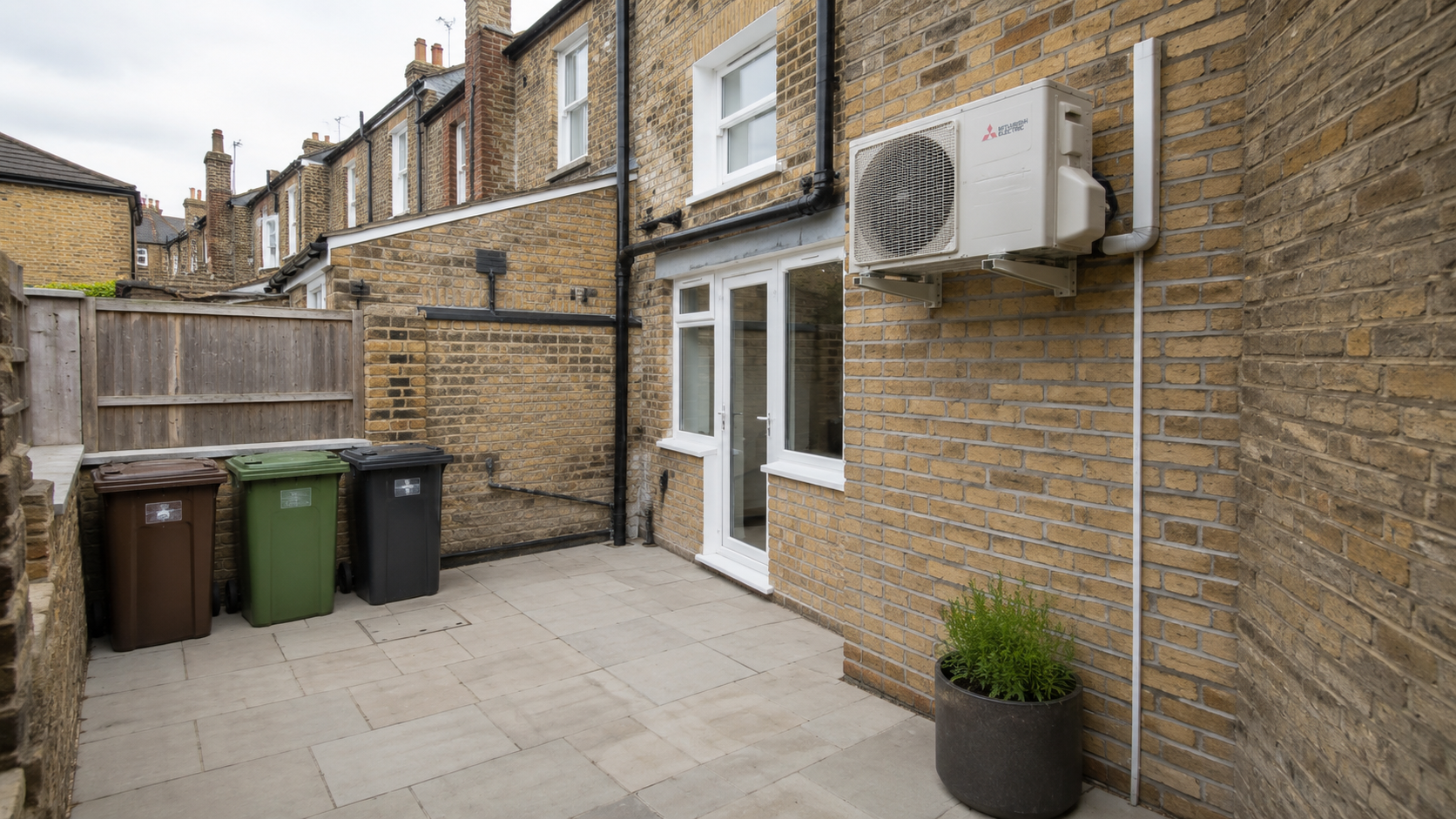
Flats are the worst-hit homes in a British summer. Heat rises through the building and stops at the top floor. Windows on one side only mean no through draught, and opening them at 11pm in a town centre trades heat for traffic noise. By the third hot night the bedroom is still sitting at 27C at 2am.
Fitted air conditioning solves it. Permission is where flat owners get stuck, and the order you do things in decides whether this is a three-week job or a six-month argument.
Read the lease before you read any quotes
Almost every leasehold flat carries a covenant against alterations, and the wording matters more than the equipment.
Look for two clauses. One covers alterations inside the flat, often allowed for non-structural work or with consent. The other covers the structure and exterior, and it is nearly always tighter. Drilling through an external wall and hanging a condenser on it falls under the second clause, because the external walls, the roof and the communal grounds belong to the freeholder rather than to you.
That is why a job which is routine in a semi becomes a consent question in a flat. The indoor unit is yours. The hole and the bracket are not. Check for a noise or nuisance clause too, as some newer leases name external plant directly.
What consent costs and how long it takes
A freeholder or managing agent grants alterations consent through a licence to alter. Expect their legal and surveyor fees to land between £300 and £1,000 for a job this size, payable by you whether or not consent is granted. Allow four to eight weeks, because agents work in monthly cycles and some refer applications to the freeholder’s surveyor.
Share of freehold and right to manage blocks are quicker and cheaper. The directors are your neighbours, the decision happens at a meeting, and the fee is often nothing beyond a solicitor checking the paperwork. Speak to them before you apply formally.
Send the application with everything attached: a drawing showing where the outdoor unit goes, the manufacturer data sheet with the sound figure, the installer’s F-Gas certificate and public liability cover, and a line confirming you will make good at your own cost if the lease ends. Applications get refused for missing detail more often than for the cooling itself.
Fitting first and asking later is a breach of covenant. It surfaces at the worst moment, when a buyer’s solicitor raises it and the sale stalls while you chase retrospective consent, which costs more than the version you skipped.
Where the condenser can go
The outdoor unit is the whole negotiation. Four positions come up in UK blocks.
On a balcony, on anti-vibration feet or a low frame. The tidiest answer where a balcony exists, as long as the unit gets clear air at the front and roughly 300mm behind it. A condenser boxed into a corner recirculates its own hot air and loses output on the hottest day.
On the external wall beside the balcony or window, on brackets. Common in low-rise blocks, where height and install access decide it.
In a communal courtyard or bin store at ground level. Cheap to install if the pipe run works, but it puts your equipment in shared space and freeholders resist it.
On the flat roof. Realistic in some blocks and a non-starter in others, because weight, waterproofing and access all get inspected first.
One detail causes more complaints than any other: condensate. An outdoor unit in heating mode sheds water, and a pipe left to drip onto the balcony below will get you a letter. Insist on a piped run to a drain.
The options when there is no outdoor space
Some flats have nowhere to put a condenser.
Monobloc air conditioning puts the whole refrigerant circuit in the indoor unit and vents through two 160mm cores drilled through the external wall, with small grilles outside. No condenser, no bracket, no visible plant. Output is lower than a split of the same size and it is louder in the room, so it suits a bedroom rather than an open-plan floor. Fitted cost usually runs £1,500 to £2,500.
Two cores through a wall still count as an alteration, so consent applies. Freeholders say yes more readily, because nothing hangs off the building and the grilles read as vents rather than plant.
A portable unit needs no consent and no holes, but the hose has to leave through a window. We set out the trade-off in portable versus fitted.
Noise, neighbours and planning
In a block, your outdoor unit sits close to somebody else’s window. A modern domestic condenser runs at 45dB to 52dB at one metre, quiet in a garden and noticeable on a small balcony at midnight. Point it away from bedroom windows, use the vibration mounts, and switch on night mode, which drops the compressor speed. Our guide to air con noise has the full figures.
Planning permission runs separately from your lease and neither one covers the other. The permitted development rules that let a house fit a condenser without an application do not extend cleanly to flats, and conservation areas tighten things again. Our planning permission guide explains where the limits fall. Check with the council before you commit.
What it costs to fit
A single split in a one-bed flat costs £1,800 to £2,800 fitted, and a two-room multi-split covering the living room and main bedroom off one condenser runs £3,500 to £5,500, from our prices page. One condenser serving two heads is the sensible route in a flat for a second reason: you only have to win the argument about outdoor plant once. Add the licence to alter fee on top.
The return is not only summer. The same unit heats in winter at roughly three units of heat for every unit of electricity, which suits a flat with an ageing communal system or expensive panel heaters. We ran the numbers in winter warmth from an air conditioner.
Get quotes from installers who have fitted in blocks before
Tell us on the quote form that the property is a flat, which floor it is on, and whether you have a balcony or any outdoor space. Installers can then quote the right system and give you the drawing and data sheet your managing agent will ask for. Three fixed quotes back within 24 hours from vetted North West installers.
Or check the prices page for a rough bracket first, or email us a question if you want to talk it through before requesting quotes.
Ready for a real quote?
Get up to 3 fixed prices from vetted North West installers.
More on Guides
What temperature should you set your air conditioning?
Setting 16C does not cool a room any faster, and it costs you for the privilege. Here is the setpoint that works in a UK summer, what each degree adds to the bill, and when dry mode beats cool mode.
Air conditioning for pets: keeping dogs, cats and rabbits cool in a UK summer
Fans do far less for a panting dog than they do for you. Here is what heat does to UK pets indoors, which room to cool, what it costs to run while you are out, and when a fitted unit is worth it.
Does air conditioning add value to a UK home?
Nobody can point to a reliable percentage uplift, so here is what air conditioning really does to a UK house sale, which homes gain most, and the install choices that protect value rather than dent it.